Wednesday, 12 July 2023

What is Article 370 of the Constitution of India?


The Supreme Court of India is scheduled to review a series of petitions that question the government’s move to abolish the special status granted to Jammu and Kashmir (J&K). It will consider petitions that question the Union government’s move to cancel the special status of Jammu and Kashmir (J&K) and divide the state in 2019, almost four years after Article 370 of the Constitution was repealed. A Constitution Bench consisting of Chief Justice of India (CJI) D.Y. Chandrachud and Justices Sanjay Kishan Kaul, Sanjiv Khanna, B.R. Gavai, and Surya Kant, will deliberate on the procedural aspects of the case.

Article 370

Article 370 recognizes the unique position of Jammu and Kashmir by granting it special status, which includes autonomy and the power to enact laws specifically for its permanent residents. It allows the state to have its own constitution and provided a unique set of powers. Moreover, the central government can extend central laws pertaining to defense, external affairs, and communications in the state only after consulting with the state government.

The Emergence of Article 35A

Article 35A was inserted into the Constitution through a Presidential order in 1954 rather than an amendment passed by Parliament. Article 35A, which stemmed from Article 370, granted powers to the Jammu and Kashmir Assembly to define ‘permanent residents‘ of the state and confer special rights and privileges upon them.
The Jammu and Kashmir Constitution defined a ‘permanent resident’ as someone who was a state subject as of May 14, 1954, or had been a resident in the state for ten years by that date, with legally acquired property. Non-permanent residents were restricted from acquiring immovable property, government employment, scholarships, and other aid provided by the state government.

What is Article 370 of the Constitution of India?_60.1

Abrogation of Article 370

On August 5, 2019, President Ram Nath Kovind issued a notification declaring the abrogation of Article 370. The notification modified the proviso of clause (3) of Article 370, replacing the “Constituent Assembly of the State” with the “Legislative Assembly of the State.” This change paved the way for the central government to abrogate the article without the existence of a Constituent Assembly in the state.

Contending Issues

The petitions that contest the nullification of Article 370 present various significant contentions. Among the primary arguments put forward are

Violation of Constitutional Procedure

Article 370 could only be amended with the recommendation of the J&K Constituent Assembly. However, the Presidential Order (CO 272) enabled the Union government to amend Article 370 without such a recommendation by altering the interpretation of Article 367, which defines the interpretation of terms in the Constitution. The petitioners argue that this procedural amendment violated the constitutional process.

Superseding Legislative Assembly

At the time of the abrogation, J&K was under President’s Rule, and the powers of the Legislative Assembly were vested in the Union Parliament. The petitioners contend that the abrogation was improper as it took place without the consent of the Legislative Assembly, which was essential for any amendment to Article 370.

Constitutional Validity

The petitions challenge the constitutional validity of the abrogation itself, arguing that it violated the basic structure of the Constitution. They argue that the abrogation significantly altered the federal structure and power-sharing arrangement between the Union and the State, which was an integral part of the original constitutional framework.

Impact on Kashmiri Residents

The petitions also highlight the impact of the abrogation on the rights and aspirations of the people of J&K. They contend that the revocation of the special status has led to a breach of trust, curtailment of fundamental rights, and a deterioration in the overall socio-political situation in the region.

Way Forward

The Supreme Court’s Constitution Bench is set to review a total of around 23 petitions submitted by lawyers, activists, politicians, and retired civil servants. Their examination related to the abrogation of Article 370 related issues will lead to the provision of procedural guidelines for the future progression of the case.

Monday, 10 July 2023

States and Capitals in India, List of 28 States and 8 UTs 2023


State and Capital

States and capitals of India: India is a country located in South Asia and is the seventh-largest country by land area. India is divided into 28 states and 8 union territories, each with its own capital city. The states and union territories are further divided into districts and subdivisions. The capital city of India is New Delhi, which is located in the National Capital Territory of Delhi. It is the administrative, political, and cultural center of the country.

The Jammu and Kashmir Reorganisation Act of 2019 designated October 31 as the designated day for the two Union Territories of J&K and Ladakh. It has never happened before for a state to be split into two Union Territories. With effect from January 26, 2020, India will have 8 union territories in addition to its 28 current states.

Countries Capital and Currencies

Since January 26th, the merger of Daman and Diu with Dadra and Nagar Haveli has formed a single union territory. This consolidation was carried out through a Bill passed in the winter session of Parliament, reducing the number of Union Territories to eight. Himachal Pradesh, Maharashtra, and Uttarakhand hold their legislative assemblies in different capital cities for their summer and winter sessions. Similarly, Ladakh has two administrative capitals, namely Leh and Kargil.

As students, you should know the complete list of Indian States and capitals List so that you can answer general Knowledge questions. Here, we are providing the latest list of Indian States and Capitals in 2023.

India is a federal union with 36 distinct entities made up of 28 states and 8 union territories. Within the states and union territories, districts and other administrative divisions are further divided. India’s states each have their own administrative, judicial, and legislative centres. According to some sources, all three duties are performed in the same capital. A Chief Minister is in charge of each state.

Union Territories Of India

According to The States Reorganization Act 1956, the states of India were organized based on linguistic lines. There are 28 states and 8 Union Territories in India now. India consists of 400 cities altogether. India has eight metropolitan cities and they are Kolkata, Mumbai, New Delhi, Chennai, Hyderabad, Bangalore, Ahmedabad and Pune. The Prime Minister of India planned to develop 100 smart cities in India in the future. Indore bagged continuously 4 times the award of Smart city.

States and Capitals of India

States and Capitals of India

Capital of India

Country Capital
India New Delhi

Here is the complete list of 28 States and Capitals of India

S.NO State Capital CM Governor
1 Andhra Pradesh Amaravati YS Jagan Mohan Reddy Biswa Bhusan Harichandan
2 Arunachal Pradesh Itanagar Pema Khandu B. D. Mishra
3 Assam Dispur Himanta Biswa Sarma Jagdish Mukhi
4 Bihar Patna Nitish Kumar Phagu Chauhan
5 Chhattisgarh Raipur Bhupesh Baghel Sushri Anusuiya Uikey
6 Goa Panaji Pramod Sawant P.S. Sreedharan Pillai
7 Gujarat Gandhinagar Bhupendra Patel Acharya Dev Vrat
8 Haryana Chandigarh Manohar Lal Bandaru Dattatraya
9 Himachal Pradesh Shimla Sukhvinder Singh Sukhu Rajendra Vishwanath Arlekar
10 Jharkhand Ranchi Hemant Soren Ramesh Bais
11 Karnataka Bengaluru Siddaramaiah Thaawarchand Gehlot
12 Kerala Thiruvananthapuram Pinarayi Vijayan Arif Mohammed Khan
13 Madhya Pradesh Bhopal Shivraj Singh Chouhan Mangubhai Chhaganbhai Patel
14 Maharashtra Mumbai Eknath Shinde Ramesh Bais
15 Manipur Imphal N. Biren Singh La. Ganesan
16 Meghalaya Shillong Conrad Kongkal Sangma Brig. (Dr.) B. D. Mishra
17 Mizoram Aizawl Pu Zoramthanga Kambhampati Haribabu
18 Nagaland Kohima Neiphiu Rio Jagdish Mukhi
19 Odisha Bhubaneswar Naveen Patnaik Ganeshi Lal
20 Punjab Chandigarh Bhagwant Singh Mann Banwarilal Purohit
21 Rajasthan Jaipur Ashok Gehlot Kalraj Mishra
22 Sikkim Gangtok PS Golay Ganga Prasad
23 Tamil Nadu Chennai M. K. Stalin R. N. Ravi
24 Telangana Hyderabad K Chandrasekhar Rao Tamilisai Soundararajan
25 Tripura Agartala Dr. Manik Saha Satyadeo Narain Arya
26 Uttar Pradesh Lucknow Yogi Aditya Nath Anandiben Patel
27 Uttarakhand Dehradun Pushkar Singh Dhami Lt. Gen. Gurmit Singh
28 West Bengal Kolkata Mamata Banerjee Dr. C.V. Ananda Bose

Complete list of 8 Union Territories

S.NO Union Territories Capital CM Lt. Governor
1 Andaman and Nicobar Island Port Blair NA D K Joshi
2 Chandigarh Chandigarh NA Banwarilal Purohit
3 Dadra and Nagar Haveli and Daman and Diu Daman NA Praful Patel
4 Delhi Delhi Arvind Kejriwal Vinai Kumar Saxena
5 Ladakh NA NA Radha Krishna Mathur
6 Lakshadweep Kavaratti NA Praful Patel
7 Jammu and Kashmir NA NA Manoj Sinha
8 Puducherry Pondicherry N. Rangaswamy Dr. Tamilisai Soundararajan

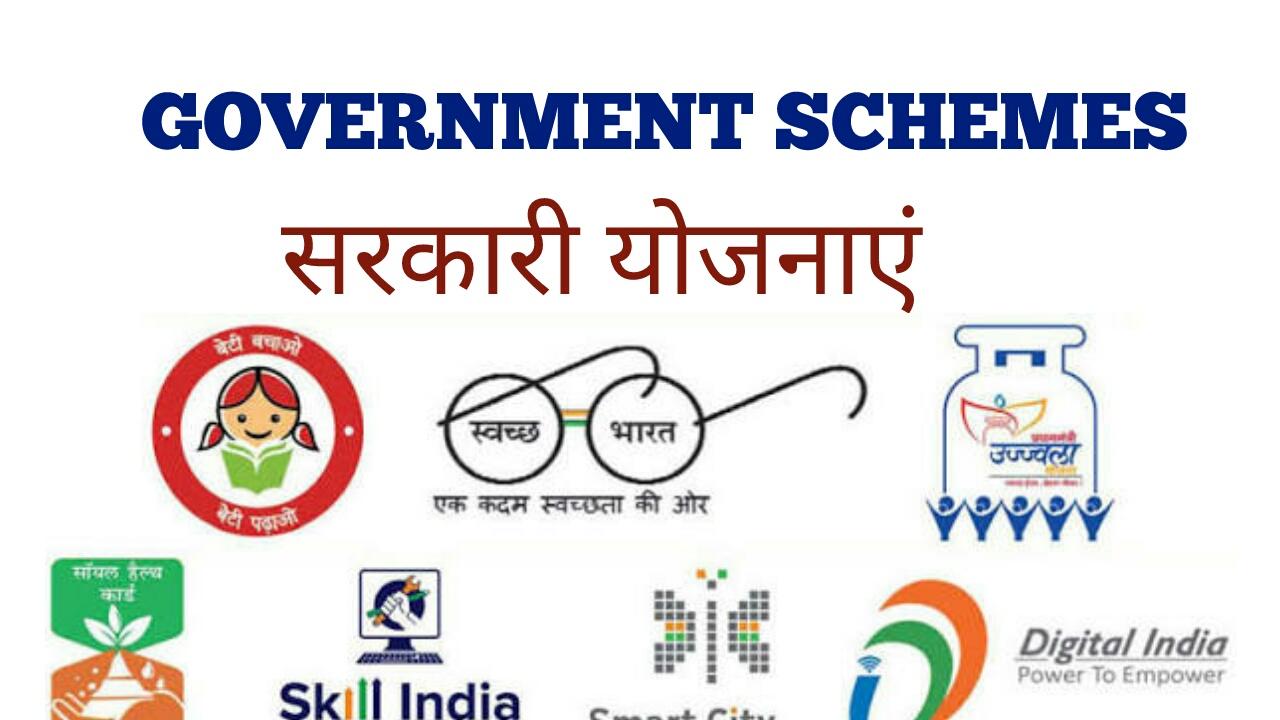
List of Important Government Schemes in India 2023


List of Important Government Schemes in India 2023

The Government of India has launched many schemes and initiatives to address social, economic, and environmental challenges. These schemes aim to promote sustainable development, improve the standard of living of citizens, and ensure equitable distribution of resources.

This article discusses some of the most important Indian government schemes that have been launched in recent years. These schemes cover various sectors, including healthcare, education, agriculture, employment, and infrastructure development. The article aims to provide a comprehensive overview of these schemes and their impact on society.

List of Important Government Schemes in India 2023_50.1

List of central government schemes

  • The Government of India has introduced a wide range of schemes and initiatives to address the social, economic, and environmental challenges faced by the country.
  • These schemes are aimed at promoting sustainable development, improving the standard of living of citizens, and ensuring equitable distribution of resources.
  • Some of the most important Indian government schemes that have been launched in recent years cover the sectors of healthcare, education, agriculture, employment, and infrastructure development.
  • The article aims to provide a comprehensive overview of these schemes and their impact on society.

List of Important Government Schemes

In 2023, the Indian government implemented various programs aimed at promoting the socio-economic progress of the country. These initiatives were created with the goal of uplifting disadvantaged and marginalized communities, improving infrastructure, and boosting economic development. Let’s explore some of the notable schemes introduced by the Indian government in 2023.

Scheme Name Ministry Sector Objective
Pradhan Mantri Jan Dhan Yojana (PMJDY) Ministry of Finance Financial Inclusion To provide financial services to the unbanked and underbanked sections of the population
Pradhan Mantri Jeevan Jyoti Bima Yojana (PMJJBY) Ministry of Finance Insurance To provide life insurance cover of ₹3 lakh to people in the age group of 18-50 years
Pradhan Mantri Suraksha Bima Yojana (PMSBY) Ministry of Finance Insurance To provide accidental death and disability cover of ₹2 lakh to people in the age group of 18-70 years
Pradhan Mantri Mudra Yojana Ministry of Micro, Small and Medium Enterprises Entrepreneurship To provide loans to micro, small and medium enterprises (MSMEs)
Stand Up India Scheme Ministry of Micro, Small and Medium Enterprises Entrepreneurship To provide loans to women and SC/ST entrepreneurs
Pradhan Mantri Kaushal Vikas Yojana (PMKVY) Ministry of Skill Development and Entrepreneurship Skill Development To provide skill training to youth and help them get jobs
Pradhan Mantri Fasal Bima Yojana (PMFBY) Ministry of Agriculture and Farmers Welfare Agriculture To provide crop insurance to farmers
Pradhan Mantri Awas Yojana (PMAY) Ministry of Housing and Urban Affairs Housing To provide affordable housing to the poor
Pradhan Mantri Garib Kalyan Anna Yojana (PMGKAY) Ministry of Consumer Affairs, Food and Public Distribution Food Security To provide subsidised food grains to the poor
Ayushman Bharat Pradhan Mantri Jan Arogya Yojana (AB-PMJAY) Ministry of Health and Family Welfare Healthcare To provide health insurance cover of ₹5 lakh to poor and vulnerable families

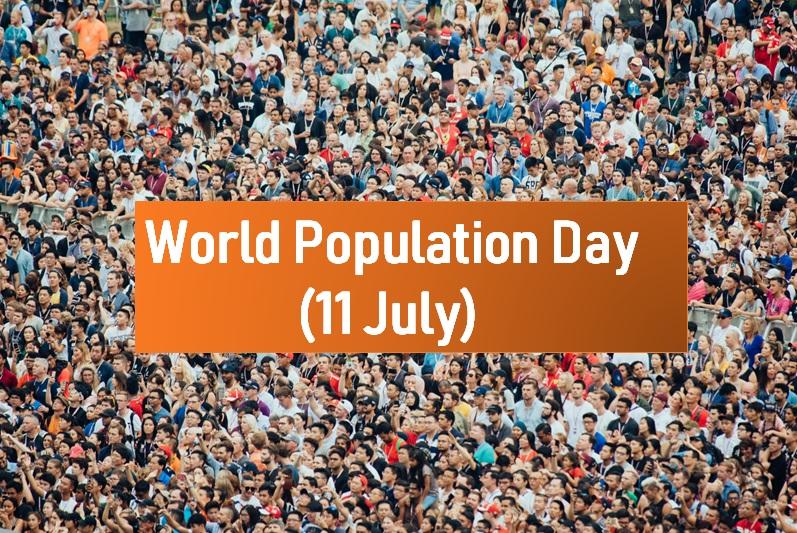
World Population Day 2023: Date, Theme, Significance and History


World Population Day is commemorated annually on July 11th to raise awareness and educate individuals about the challenges and consequences associated with global population growth. It serves as a reminder to continuously work towards addressing these issues and improving the lives of everyone on the planet. The observance of World Population Day aims to promote understanding and encourage collective efforts in tackling the impacts of population growth.

World Population Day 2023: Date, Theme, Significance and History_50.1

World Population Day 2023-Theme

According to United Nations, the theme for this year’s World Population Day is – Unleashing the power of gender equality: Uplifting the voices of women and girls to unlock our world’s infinite possibilities.

World Population Day 2023-Significance

World Population Day focuses on bringing attention to critical issues concerning the global population. It aims to raise awareness about various challenges such as gender inequality, economic crises, and poverty. This day serves as a reminder to actively strive for the betterment of people’s lives and drive positive transformations. The United Nations celebrates World Population Day with a vision of creating a future where everyone has equal opportunities and limitless potential. Moreover, it works towards building a sustainable world in line with the goals outlined in the 2030 Agenda for Sustainable Development.

World Population Day 2023-History

The United Nations Development Programme’s Governing Council established World Population Day in 1989, inspired by the Day of Five Billion observed on July 11, 1987. In 1990, the United Nations General Assembly, through Resolution 45/216, decided to continue celebrating World Population Day to raise awareness about population issues and their interconnection with the environment and development.

The first World Population Day was observed on July 11, 1990, in more than 90 countries. Since then, numerous organizations, institutions, and United Nations Population Fund (UNFPA) country offices, in partnership with governments and civil society, have been marking this day to bring attention to population-related concerns.

Important takeaways for all competitive exams:

  • United Nations Population Fund  Headquarters: New York, New York, United States;
  • United Nations Population Fund  Founded: 1969;
  • United Nations Population Fund Head: Natalia Kanem.

Tuesday, 4 July 2023

New Zealand becomes first country to ban plastic produce bags

 New Zealand has taken a momentous step towards reducing plastic waste by becoming the first country to implement a complete ban on thin plastic bags commonly used in supermarkets for fruit and vegetable purchases. Moreover, this move will extend beyond bags, as it also includes banning of plastic straws and silverware. This significant move aligns with the government’s ongoing campaign against single-use plastics, which began in 2019 with the prohibition of thicker plastic shopping bags.


New Zealand’s Fight Against Plastic

Since 2019, New Zealand has been actively promoting sustainable practices and combatting plastic pollution. The initial ban on thicker plastic shopping bags was a significant step towards reducing plastic waste and encouraging the use of reusable alternatives. Building upon this success, the government has now expanded the campaign to target additional single-use plastics, including thin plastic bags, straws and silverware.

Progress made up until now

New Zealand always had a significant problem regarding the excessive generation of plastic waste, which requires urgent attention and effective solutions. The 2019 bag ban alone prevented over 1 billion plastic bags from being used in the country. With the addition of the ban on thin bags, an estimated reduction of 150 million bags per year is expected. The focus of government is to reduce all forms of single-use packaging and to encourage people to bring their own bags while supermarkets are selling reusable produce bags.

Impact on Environment

Lightweight bags, typically used to collect fruits and vegetables at supermarkets, have detrimental effects on the environment. It contributes to the escalating problem of plastic pollution worldwide. By banning their production and distribution, New Zealand has become the first country to outlaw the use of plastic bags. The country aims to significantly curb plastic waste and promote sustainable alternatives.


  • Prime Minister of New Zealand is Chris Hipkins
  • Rachel Brooking is the Minister for Oceans and Fisheries of New Zealand


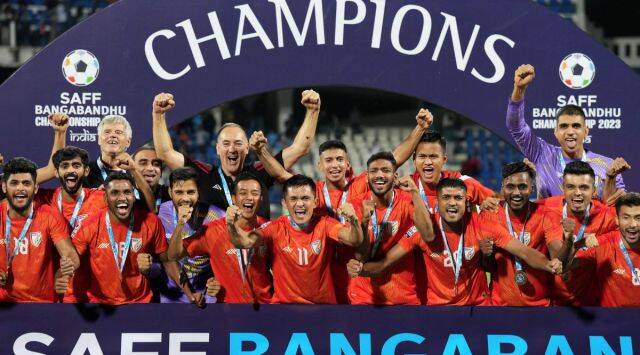
SAFF Championship 2023 Final: India wins 9th title


The Indian men’s football team emerged victorious in a thrilling penalty shootout against Kuwait 5-4 in a thrilling penalty shootout, securing the SAFF Championship 2023 title at Bengaluru’s Sree Kanteerava Stadium. Ranked 100th in the latest FIFA rankings, India triumphed in their ninth SAFF Championship out of 14 editions. This victory marked their second consecutive triumph after winning the Intercontinental Cup the previous month.

SAFF Championship 2023 Final: India wins 9th title_50.1

India, serving as the hosts, remained undefeated throughout the SAFF Championship 2023. They defeated Pakistan and Nepal while drawing against Kuwait in the group stage. In the semifinals, they overcame Lebanon in a penalty shootout and replicated the same feat against Kuwait in a nail-biting final. In addition to the medals, the team was awarded a cash prize of USD 50,000, equivalent to INR 41 lakh. 

Kuwait football team received the award for finishing runners-up in the SAFF Championship 2023. While all the players received medals, the team also got a cheque of US Dollar 25,000 which is around 20 lakh and about 50 thousands in Indian currency.

READER OF THE MONTH jUNE 2023!!

 CONGRATULATIONS, SAANIA AFFRAH  !!!

III BBA 

Total Time Spent on Library :7.95 Hours 


      “Reading is essential for those who seek to rise above the ordinary.” - Jim Rohn


Fresh on the Shelves: New Arrivals for Semesters I & III

 The Christ College Library has expanded its collection with the latest syllabus-aligned textbooks, reference handbooks, and standard academ...