Monday, 17 July 2023

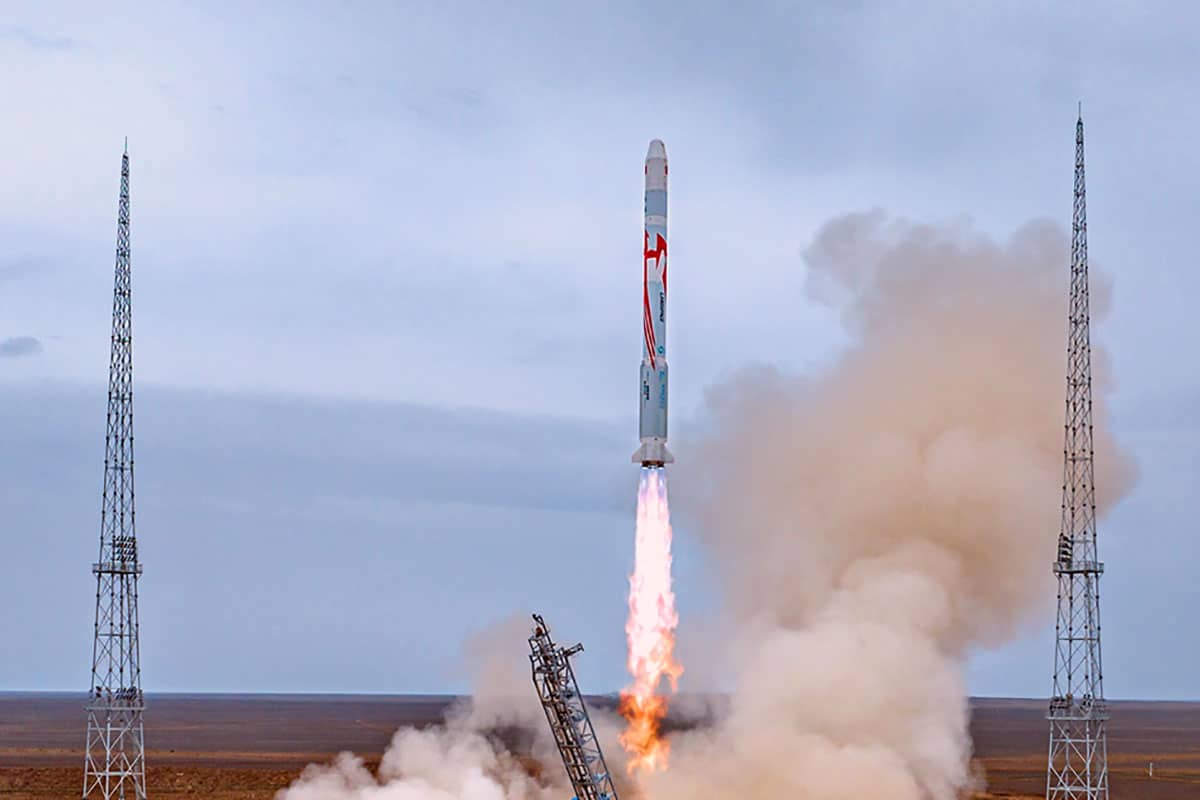
China launched world’s first methane-fuelled space rocket


Context:

A private Chinese company launched the World’s first methane-fuelled space rocket into orbit named “Zhuque-2”.

Highlights of the News

The Zhuque-2 carrier rocket blasted off at 9:00A.M. (01:00 GMT) on 12th July from the Jiuquan Satellite Launch Centre in northwest China’s Inner Mongolia Autonomous region and completed the flight mission according to the procedure.

  • China’s Zhuque-2 has become the World’s first methane propelled rocket to successfully fly into orbit.
  • This was Landscape’s second attempt after a launch failed in December.
  • This landmark achievement signifies a paradigm shift in the race towards cleaner, safe and reusable space travel technology.
  • Zhuque-2 achieved the expected trajectory and completed its flight according to plan.
  • The launch indicated significant progress in the development of the reusable rockets, as methane engines offers excellent performance with lower operational costs.
  • Landscape also became the second private Chinese company to launch a liquid-propellant rocket.

About the Zhueque-2:

  • The Zhuque-2 is a Chinese orbital class launching vehicle developed by Landscape.
  • It is liquid-fuelled rocket powered by liquid oxygen and liquid methane (methalox).
  • It is first methane-fuelled rocket to reach orbit.
  • Zhuque-2 has a liftoff weight of 216 metric tons and uses 4 TQ-12 methalox engines in the first stage with a thrust of 67 metric tonnes.
  • The second stage utilizes one optimized TQ-12 with a thrust of 80 metric tonnes in combination with an 8 metric tonnes thrust TQ-11 engine which acts as a vernier thruster.
  • Zhuque-2 has a capability of lifting 6,000 kg of payload into a 200 km low Earth orbit and 4,000 kg of payload into a 500 km Sun-synchronous orbit.
  • Zhuque-2 has also been launched on 14 December 2022 but it was a failure.

Process of launching of Zhueque-2:

One of the two planned rockets that will carry spacecraft will land on the moon’s surface and the other will transport the astronauts.

The twin-rocket plan would overcome China’s longstanding technological hurdle of developing a heavy-duty powerful enough to send both astronauts and a moon lander probe into space.

After Chinese astronauts have completed their scientific tasks and collected samples from the moon, the lander will transport the astronauts back to the orbiting spacecraft, on which they will return to Earth.

Sunday, 16 July 2023

Chandrayaan-3: India’s Mission to Soft-Land on the Moon’s South Pole


Chandrayaan-3: India’s Mission to Soft-Land on the Moon’s South Pole

Chandrayaan-3 is India’s third lunar mission, following the Chandrayaan-2 mission, with the goal of achieving a soft landing on the lunar surface and deploying a rover.

Chandrayaan-3 aims to showcase India’s capabilities in landing and exploring the Moon’s South Pole, a region known for the presence of water molecules.

Launch and Landing:

Chandrayaan-3: India's Mission to Soft-Land on the Moon's South Pole_60.1
Chandrayaan-3: India’s Mission to Soft-Land on the Moon’s South Pole
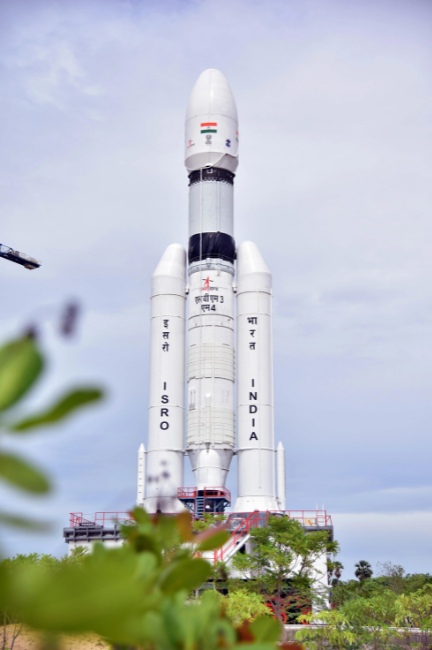
  • Chandrayaan-3 was successfully launched on July 14, 2023, from the Satish Dhawan Space Center in Sriharikota, Andhra Pradesh, using the Launch Vehicle Mark-III (LVM3).
  • The spacecraft consists of a lander, a rover, and a propulsion module, collectively weighing 3,900 kg.
  • The GSLV Mark 3 heavy-lift launch vehicle, also known as the Bahubali rocket, supports the moon lander Vikram.
  • The craft is scheduled to touch down on the Moon’s South Pole on August 23, following a journey lasting over 40 days.
Chandrayaan-3: India's Mission to Soft-Land on the Moon's South Pole_70.1
Chandrayaan-3: India’s Mission to Soft-Land on the Moon’s South Pole

Objective:

The Chandrayaan-3 mission has three main objectives:

Chandrayaan-3: India's Mission to Soft-Land on the Moon's South Pole_80.1
Chandrayaan-3: India’s Mission to Soft-Land on the Moon’s South Pole
  1. Safe and Soft Landing: The primary objective of Chandrayaan-3 is to achieve a safe and soft landing of the lander on the surface of the Moon. Learning from the previous mission’s setback, this mission aims to successfully land the lander module on the lunar surface without any issues.

  2. Demonstration of Rover’s Capabilities: Chandrayaan-3 aims to demonstrate the capabilities of the rover by showcasing its roaming and exploration abilities on the lunar surface. The rover will be deployed after the successful landing of the lander and will perform various scientific experiments and observations.
  3. In-Site Scientific Observations: The mission seeks to conduct in-site scientific observations and experiments to better understand the composition of the Moon. This includes analyzing the chemical and natural elements, soil, water, and other resources available on the lunar surface. These observations will contribute to expanding our knowledge of the Moon’s composition and provide insights into the Moon’s history and evolution.

Design:

Chandrayaan-3 consists of three main components:

Chandrayaan-3: India's Mission to Soft-Land on the Moon's South Pole_90.1
Chandrayaan-3: India’s Mission to Soft-Land on the Moon’s South Pole
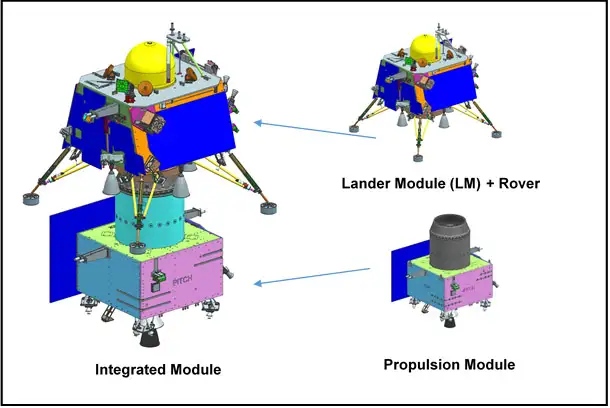
  1. Propulsion Module: The propulsion module is responsible for carrying the lander and rover configuration to the lunar orbit of 100 kilometers. It is a box-like structure with a large solar panel and an intermodular adapter cone that acts as a mounting structure for the lander. Additionally, it carries the SHAPE payload, which studies spectral and polarimetric measurements of Earth from the lunar orbit.
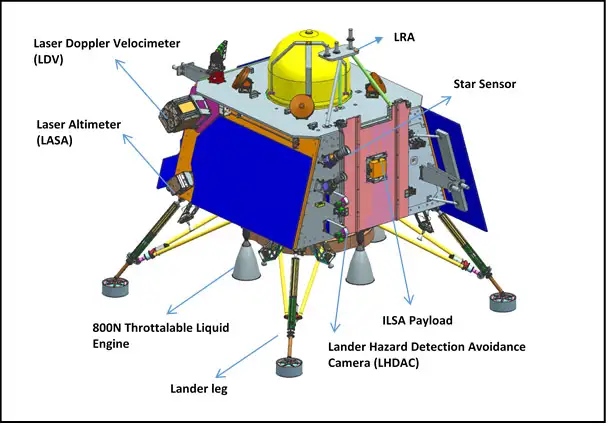
  2. Lander: The lander module is designed for a soft landing on the lunar surface. It has a box-shaped structure with four landing legs and four landing thrusters. The lander carries the rover and various scientific instruments for in-site analysis. It has undergone improvements in terms of structural rigidity, impact legs strength, and instrumentation redundancy compared to its predecessor.

The lander carries three payloads:

Chandrayaan-3: India's Mission to Soft-Land on the Moon's South Pole_100.1
Chandrayaan-3: India’s Mission to Soft-Land on the Moon’s South Pole
  • Chandra’s Surface Thermophysical Experiment (ChaSTE): Measures thermal conductivity and temperature of the lunar surface.
  • Instrument for Lunar Seismic Activity (ILSA): Measures seismic activity around the landing site.
  • Langmuir Probe (LP): Estimates plasma density and its variations.
  1. Rover: The Chandrayaan-3 rover is a six-wheeled vehicle weighing 26 kilograms. It is equipped with scientific instruments, including cameras, spectrometers, and a drill. The rover has a range of 500 meters and is designed to communicate with the lander and the ground control team in India. Its expected lifespan is one lunar day, equivalent to 14 Earth days.

The rover aims to make significant scientific discoveries, including studying the lunar surface composition, detecting the presence of water ice in the lunar soil, investigating lunar impacts’ history, and studying the Moon’s atmosphere evolution.

Modifications and Precautions:

  • Chandrayaan-3 has undergone modifications by ISRO to enhance reliability compared to its predecessor, Chandrayaan-2.
  • The lander Vikram has been upgraded and carries additional fuel to ensure a successful landing and stay on the intended path to the lunar surface.
  • The craft has undergone rigorous testing and incorporates numerous safety measures to increase the mission’s chances of success.

Mission Components:

  • The 3,900-kilogram Chandrayaan-3 spacecraft consists of three major modules: the Propulsion module, Lander module, and Rover.
  • The lander, named Vikram, and the rover, named Pragyaan, are similar to their counterparts in Chandrayaan-2 but have undergone upgrades for improved reliability.
  • The mission’s budget is Rs. 615 crore.

What is Maputo Protocol?


According to a new report titled 20 years of the Maputo Protocol, some progress has been made in gender equality. Where are we now?

What’s in News?

To mark the 20th anniversary of Maputo Protocol to promote the continued adaptation and implementation of its progressive provisions, a landmark report has been prepared by the Solidarity for African Women’s Rights Coalition (SOAWR), Equality Now and Make Every Women Count (MEWC), titled 20 years of the Maputo Protocol.

The report ’20 Years of the Maputo Protocol’:

The report summarizes the progress that has been made in Africa to date towards the ratification, domestication and implementation of the Maputo Protocol with a series of detailed case studies illustrating some key achievements and challenges along the way.

The evidence is presented alongside recommendations from SOAWR Member Organizations to support states in their continued efforts towards advancing gender equality on the continent.

About the Maputo Protocol:

The protocol to the African Charter on Human and People’s Rights of Women in Africa, known as Maputo Protocol is an international human rights instrument established by the African Union.

Adoption:

It was adopted by the African Union in Maputo, Mozambique in 2003 in the form of a protocol to the African Charter on Human and People’s Rights.

It went into effect in 2005.

Ratification:

  • Of the 55 member states, 44 have ratified or acceded to the protocol on gender equality, becoming one of the most ratified instruments in the AU.
  • Full domestication of the protocol in many of the states has been slow or ineffective.
  • Some states of the Africa are yet to ratify or accede to the protocol.

Mandate:

It guarantees comprehensive rights to women including the right to take part in the political process, to social and political equality with men, improved autonomy in their reproductive health decisions and end-to-end female genital mutilation.

African Women’s Rights under Maputo Protocol:

The Protocol provides extensive rights to African Women and Girls and includes progressive provisions on:

  • Harmful traditional practices e.g. child marriage and female genital mutilation (FGM).
  • Reproductive health and rights.
  • Roles in political processes.
  • Economic empowerment.
  • Ending violence against women.

Nelson Mandela International Day 2023: Date, Theme, Significance and History


Nelson Mandela day is observed on July 18 every year. The United Nations (UN) had in 2009 declared July 18 as Nelson Mandela Day to honour Nelson Mandela, a South African anti-apartheid activist who served as the first President from 1994 to 1999. Mandela was the first black head of state and was the first elected President in a fully democratic election in South Africa. The Day will also enlighten his transitional steps to defeat multiracial democracy in South Africa. This article entitles the history and significance of this day authentically.

The day was first celebrated on July 18, 2010, the 92nd birthday of Mandela, to honour the achievements of the anti-apartheid leader. To mark the first celebration of Mandela Day, fundraising programs, art exhibitions and music concerts were organised.

Nelson Mandela International Day 2023: Date, Theme, Significance and History_60.1

Thursday, 13 July 2023

Chandrayaan-3 Launch Date, Mission, Live Updates


India’s lunar mission Chandrayaan 3 is going to be launched on July 14, at 2:35 P.M. from Satish Dhawan Space Centre in Sriharikota announced by the Indian Space Research Organisation (ISRO).The date was later confirmed by Secretary of Space department and ISRO Chairman S. Somnath at a press briefing on the sidelines of the G-20 Fourth Economy Leaders Meeting in Bengluru.

Chandrayaan-3 Launch Countdown Live Updates

  • India is striving to become the fourth country to accomplish a gentle touchdown on the Moon, following the United States, the Soviet Union, China, and Israel. Out of these nations, all except Israel were able to successfully achieve a soft landing on the lunar surface. If Chandrayaan-3 accomplishes a successful soft landing on the Moon, India will join this exclusive group as the fourth nation to reach this significant milestone.
  • On Tuesday, ISRO (Indian Space Research Organisation) announced via a tweet that the ‘Launch Rehearsal’ for Chandrayaan 3 had been successfully completed. The rehearsal involved a comprehensive simulation of the entire launch preparation and process, spanning 24 hours.
  • The rover of Chandrayaan is outfitted with two scientific instruments known as payloads: the Alpha Particle X-ray Spectrometer (APXS) and the Laser Induced Breakdown Spectroscope (LIBS). The APXS will play a crucial role in analyzing the composition of the lunar soil and rocks near the landing site, focusing on elements such as magnesium, aluminium, silicon, potassium, calcium, titanium, and iron. Its findings will provide valuable insights into the elemental makeup of the lunar surface.

 About the Chandrayaan 3

The Chandrayaan-3 spacecraft will be launched by the Launch Vehicle Mark-III (LVM3). Chandrayaan-3 is a follow-up to Chandrayaan-2, to demonstrate end-to-end capability in safe landing and roving on the lunar surface.

  • Chandrayaan-3 is a follow-on mission to Chandrayaan-2 to demonstrate end-to-end capability in safe landing and roving on the lunar surface.
  • Chandrayaan-3 is consists of Lander and Rover configuration.
  • Chandrayaan-3 will be launched by Launch Vehicle Mark-III (LVM-3) from Satish Dhawan Space Centre in Sriharikota.
  • Chandrayaan-3 is consists of Lander Module (LM), Propulsion Module (PM) and a Rover with an objective of developing and demonstrating new technologies required for Interplanetary Missions.
  • The Lander and the Rover have scientific payloads to carryout experiments on the lunar surface.
  • The launcher identifies for Chandrayaan-3 is GSLV-MK3.

Process of launching of Chandrayaan 3

Chandrayaan-3 Launch Date, Mission, Live Updates_60.1
Process of launching of Chandrayaan 3

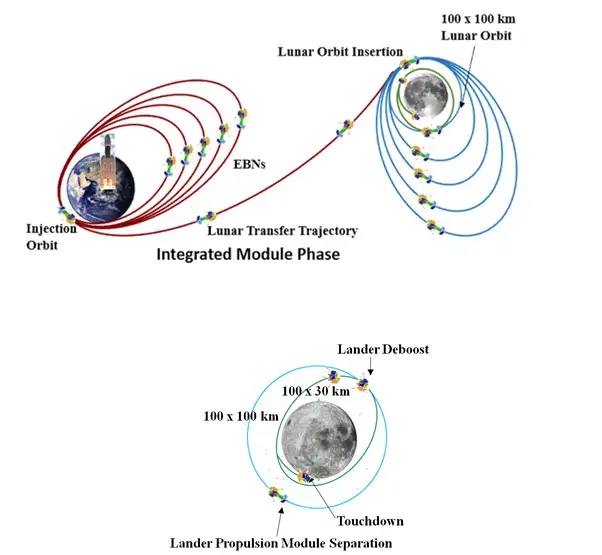
Chandrayaan-3 is expected to soft land between August 23 and 24 at moon’s South Pole, the area which will have sunlight. The sunlight has to fall on the solar panels of the spacecraft. If these two dates were missed then the landing will be postponed to September around the time when there is sunlight on the moon. There is sunlight on the moon for 14-15 days.

Objectives of Chandrayaan-3

  • To demonstrate safe and soft landing on the lunar surface.
  • To demonstrate Rover roving on the moon.
  • To conduct in-situ scientific experiments.

Technologies used in Chandrayaan-3

To achieve the objectives of the mission, several technologies are used in Lander and that are:

  1. Altimeters: Laser and RF based Altimeters.
  2. Velocimeters: Laser Doppler Velocimeter and Lander Horizontal Velocity Camera.
  3. Inertial Measurement: Laser Gyro based Inertial referencing and Accelerometer package.
  4. Propulsion System: 800N Throttleable Liquid Engines, 58N altitude thrusters and Throttleable Engine Control Electronics.
  5. Navigation, Guidance and Control: Powered descent trajectory design and associate software elements.
  6. Hazard Detection and Avoidance: Lander hazard detection & avoidance camera and processing algorithm.
  7. Landing Leg Mechanism.

Test carried out for soft landing of Chandrayaan 3

  • Integrated Cold Test: For the demonstration of integrated sensors and navigation performing test using helicopter as test platform.
  • Integrated Hot Test: For the demonstration of closed loop performance test with sensors, actuators and NGC using tower crane as test platform.
  • Lander Leg Mechanism performance test on a lunar stimulant test bed simulating different touch down conditions.   

Importance of the Chandrayaan 3 Mission

Missions like Chandrayaan hold great significance as they involve the participation of multiple countries. These collaborative endeavors contribute to scientific exchange and foster camaraderie among nations.

There is a potential for future international cooperation in exploring the south-polar region of the Moon. This region contains craters that are perpetually shadowed and devoid of sunlight. These cold, shadowed sites are believed to contain hydrogen, water, ice, and possibly even primordial material that can provide insights into the origins of our Solar System. Additionally, the largest lunar crater is located in the south polar region, and its formation around 4 billion years ago remains a mystery. Exploring and understanding our celestial neighbor will greatly contribute to our understanding of the cosmos.

The question may arise as to why India should invest in such high-tech endeavors instead of focusing on readily available technologies for the public good. The answer lies in the fact that these high-tech areas can indeed be used for the public good as well. Developing countries require knowledge in these areas to enhance the quality of life for their citizens. Space technologies have become indispensable for weather prediction, marine resource assessment, forest cover estimation, communication, defense, and various other domains. It is essential for every country to have a balance between futuristic technologies and those immediately relevant, allocating resources accordingly.

R. Chidambaram, a former Principal Scientific Advisor to the Government of India, once emphasized that active participation in emerging technologies positions a nation as a leader in that field, granting it leverage in international negotiations. This, in turn, enables a country to enhance its science and technology base, ultimately improving the lives of its citizens and elevating its prestige.

World Youth Skills Day 2023: Date, Theme, Significance and History


World Youth Skills Day, observed annually on July 15th since 2014 as declared by the United Nations, serves the purpose of recognizing the significance of imparting young individuals with the necessary skills for employment, decent work, and entrepreneurship. With the continuous progress of technology and changes in the labor market, it is essential to equip young people with adaptable and flexible skill sets.

Technical and vocational education and training (TVET) play a crucial role in addressing these needs by reducing barriers to accessing employment, ensuring the relevance and certification of acquired skills, promoting environmentally-friendly skills and practices, and providing skill development opportunities for youth who are not engaged in education, employment, or training.

World Youth Skills Day 2023: Date, Theme, Significance and History_50.1

Theme of World Youth Skills Day 2023

The theme for World Youth Skills Day 2023 is Skilling teachers, trainers and youth for a transformative future. It highlights the essential role that teachers, trainers and other educators play in providing skills for youth to transition to the labour market and to actively engage in their communities and societies.

Why is World Youth Skills Day important?

In 2014, the United Nations General Assembly declared 15 July as World Youth Skills Day, to celebrate the strategic importance of equipping young people with skills for employment, decent work and entrepreneurship. Since then, World Youth Skills Day events have provided a unique opportunity for dialogue between young people, technical and vocational education and training (TVET) institutions, firms, employers’ and workers’ organizations, policy makers and development partners. Participants have highlighted the ever-increasing significance of skills as the world is embarking on a transition towards a sustainable model of development.

History of World Youth Skills Day

During the aftermath of the Second World War, the United Nations was founded on October 24, 1945, after its Charter was ratified by China, France, the U.S.S.R., the U.K., and the United States, along with other signatories. The aim of the organization has always been to maintain global peace and security, give humanitarian support, defend human rights, and uphold international law. It was created as a successor to the League of Nations that disintegrated prior to the Second World War.

Over its years of functioning, the United Nations has been an active part of the global polity. It has modified its functioning with changes in international relations: in the face of decolonization of the Global South, the end of the Cold War, the rise of the U.S. as a hegemon, climate change, refugee crises, etc. Today, the U.N. works to attain its 17 sustainable development goals.

In 2014, the U.N. announced World Youth Skills Day. The objective of this day was to shed some light on the necessary skills for the employment and entrepreneurship of young people and their strategic importance for the future. This day is a unique opportunity for policy partners, employers, development partners, and vocational and training educational programs to dialogue with young people about the skills needed as the world transitions into a sustainable development model.

Wednesday, 12 July 2023

Chandrayaan-3 Launch Date, Mission, Live Updates


India’s lunar mission Chandrayaan 3 is going to be launched on July 14, at 2:35 P.M. from Satish Dhawan Space Centre in Sriharikota announced by the Indian Space Research Organisation (ISRO).The date was later confirmed by Secretary of Space department and ISRO Chairman S. Somnath at a press briefing on the sidelines of the G-20 Fourth Economy Leaders Meeting in Bengluru.

Chandrayaan-3 Launch Countdown Live Updates

On Tuesday, ISRO (Indian Space Research Organisation) announced via a tweet that the ‘Launch Rehearsal’ for Chandrayaan 3 had been successfully completed. The rehearsal involved a comprehensive simulation of the entire launch preparation and process, spanning 24 hours.

 About the Chandrayaan 3

The Chandrayaan-3 spacecraft will be launched by the Launch Vehicle Mark-III (LVM3). Chandrayaan-3 is a follow-up to Chandrayaan-2, to demonstrate end-to-end capability in safe landing and roving on the lunar surface.

  • Chandrayaan-3 is a follow-on mission to Chandrayaan-2 to demonstrate end-to-end capability in safe landing and roving on the lunar surface.
  • Chandrayaan-3 is consists of Lander and Rover configuration.
  • Chandrayaan-3 will be launched by Launch Vehicle Mark-III (LVM-3) from Satish Dhawan Space Centre in Sriharikota.
  • Chandrayaan-3 is consists of Lander Module (LM), Propulsion Module (PM) and a Rover with an objective of developing and demonstrating new technologies required for Interplanetary Missions.
  • The Lander and the Rover have scientific payloads to carryout experiments on the lunar surface.
  • The launcher identifies for Chandrayaan-3 is GSLV-MK3.

Process of launching of Chandrayaan 3

Chandrayaan-3 is expected to soft land between August 23 and 24 at moon’s South Pole, the area which will have sunlight. The sunlight has to fall on the solar panels of the spacecraft. If these two dates were missed then the landing will be postponed to September around the time when there is sunlight on the moon. There is sunlight on the moon for 14-15 days.

Objectives of Chandrayaan-3

  • To demonstrate safe and soft landing on the lunar surface.
  • To demonstrate Rover roving on the moon.
  • To conduct in-situ scientific experiments.

Technologies used in Chandrayaan-3

To achieve the objectives of the mission, several technologies are used in Lander and that are:

  1. Altimeters: Laser and RF based Altimeters.
  2. Velocimeters: Laser Doppler Velocimeter and Lander Horizontal Velocity Camera.
  3. Inertial Measurement: Laser Gyro based Inertial referencing and Accelerometer package.
  4. Propulsion System: 800N Throttleable Liquid Engines, 58N altitude thrusters and Throttleable Engine Control Electronics.
  5. Navigation, Guidance and Control: Powered descent trajectory design and associate software elements.
  6. Hazard Detection and Avoidance: Lander hazard detection & avoidance camera and processing algorithm.
  7. Landing Leg Mechanism.

Test carried out for soft landing of Chandrayaan 3

  • Integrated Cold Test: For the demonstration of integrated sensors and navigation performing test using helicopter as test platform.
  • Integrated Hot Test: For the demonstration of closed loop performance test with sensors, actuators and NGC using tower crane as test platform.
  • Lander Leg Mechanism performance test on a lunar stimulant test bed simulating different touch down conditions.   

Importance of the Chandrayaan 3 Mission

Missions like Chandrayaan hold great significance as they involve the participation of multiple countries. These collaborative endeavors contribute to scientific exchange and foster camaraderie among nations.

There is a potential for future international cooperation in exploring the south-polar region of the Moon. This region contains craters that are perpetually shadowed and devoid of sunlight. These cold, shadowed sites are believed to contain hydrogen, water, ice, and possibly even primordial material that can provide insights into the origins of our Solar System. Additionally, the largest lunar crater is located in the south polar region, and its formation around 4 billion years ago remains a mystery. Exploring and understanding our celestial neighbor will greatly contribute to our understanding of the cosmos.

The question may arise as to why India should invest in such high-tech endeavors instead of focusing on readily available technologies for the public good. The answer lies in the fact that these high-tech areas can indeed be used for the public good as well. Developing countries require knowledge in these areas to enhance the quality of life for their citizens. Space technologies have become indispensable for weather prediction, marine resource assessment, forest cover estimation, communication, defense, and various other domains. It is essential for every country to have a balance between futuristic technologies and those immediately relevant, allocating resources accordingly.

R. Chidambaram, a former Principal Scientific Advisor to the Government of India, once emphasized that active participation in emerging technologies positions a nation as a leader in that field, granting it leverage in international negotiations. This, in turn, enables a country to enhance its science and technology base, ultimately improving the lives of its citizens and elevating its prestige.

Fresh on the Shelves: New Arrivals for Semesters I & III

 The Christ College Library has expanded its collection with the latest syllabus-aligned textbooks, reference handbooks, and standard academ...